

Glassware Handling Guide
Precision Scientific Glassware Manufacturer in India
Glassware Handling Guide
Laboratory glassware is foundational to scientific research, chemical analysis, clinical diagnostics, and industrial testing. Proper handling ensures accurate results, extends the lifetime of your equipment, and protects users from safety hazards.
This guide covers everything from safe handling practices and do’s/don’ts to storage tips, transport protocols, emergency response, and best practices for different lab environments. Whether you are a seasoned researcher or a new lab technician, this complete Glassware Handling Guide provides the knowledge you need to maintain safety, reliability, and performance.
Why Proper Glassware Handling Matters
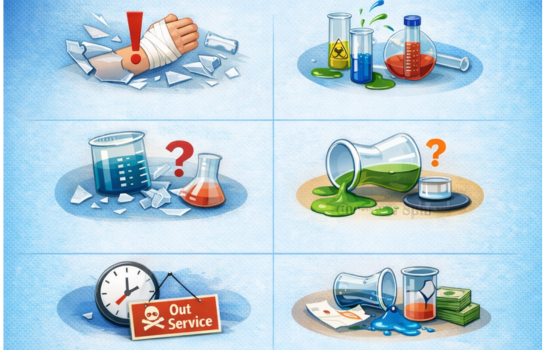
Laboratory glassware is precision-engineered, but it is also brittle and sensitive to improper handling. Mishandling can lead to:
- Breakage and injury
- Contamination of samples
- Inaccurate measurements
- Chemical spills
- Laboratory downtime
- Equipment loss and replacement costs
Safe handling protects your workspace, personnel, and experimental integrity.
Personal Protective Equipment (PPE)
Before handling glassware, always wear appropriate personal protective equipment:
 Safety goggles or face shields
Protect your eyes from splashes and breakage.
 Lab coat or apron
Shields against spills and sharp shards.
 Chemical-resistant gloves
Protects hands from chemical burns and cuts.
 Closed-toe footwear
Minimizes risk from dropped glass or spills.
Full PPE is a mandatory first step before any glassware handling.
Glassware Safety Basics
Inspect Before Use
Always examine glassware before working with it:
- Check for chips, cracks, hairline fractures, or cloudiness.
- Even small defects can cause failure under stress.
- Never use damaged glassware – replace it immediately.
Handle with Two Hands
Always support glassware with both hands, especially when:
- Filling or emptying contents
- Moving between benches
- Transferring hot or cold liquids
Pouring & Transferring Liquids Safely
For accurate and safe liquid transfer:
Use a Funnel or Pipette
- Funnels reduce spillage.
- Pipettes improve accuracy.
Avoid pouring directly from large flasks into small openings without control.
Control Flow
Pour slowly – rapid flow leads to:
- Spills
- Turbulence
- Inaccurate measurements
Read Meniscus Precisely
When measuring liquids in graduated cylinders:
- Read at eye level
- Align with the bottom of the meniscus
- Avoid parallax error
Get In Touch
Have questions? Want a custom quote? Need help selecting the right products?
Handling Specialized Glassware
Some glassware requires special attention due to shape, purpose, or sensitivity:
Volumetric Flasks
- Designed for precise solution preparation
- Do not shake vigorously
- Use stopper gently
Burettes
- Always clamp securely
- Avoid rapid liquid flow
- Drain completely after use
Distillation & Condenser Sets
- Assemble slowly
- Use proper clamps and stands
- Tighten water lines to stop leaks
Heating Glassware Safely
Heating glassware is common in labs, but requires caution:
Use Heat-Resistant Glassware
Only use glassware designed for thermal exposure (e.g., borosilicate). Never heat regular glass.
Gradual Heating
Never expose glassware to sudden high heat. Instead:
- Start with low heat
- Gradually increase temperature
- Avoid open flames when possible
- Use hot plates or heating mantles with controls
Holding Heated Glassware
After heating:
- Allow cooling before handling
- Hot glass appears deceptively normal
- Use heat-resistant gloves or tongs
Never pick up heated glassware with bare hands.
Assembly & Disassembly of Glass Sets
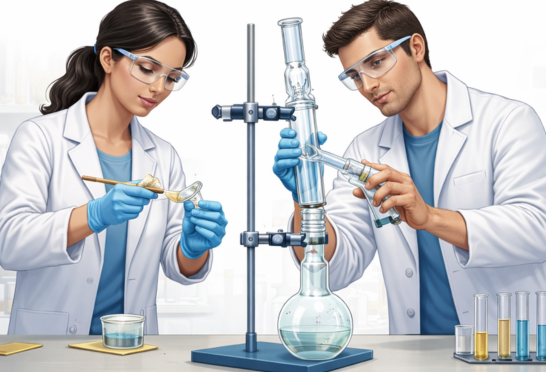
Many laboratory procedures involve multi-piece glass assemblies:
- Always lubricate ground glass joints lightly
- Match joint sizes precisely
- Support assemblies with clamps and stands
- Do not twist or force pieces together
For disassembly:
- Hold the base securely
- Apply gentle twisting motion
- Never use excessive force
- Proper assembly prevents stress fractures and breakage.
Cleaning Glassware Without Damage
Refer to our detailed Cleaning & Maintenance Guide for full cleaning instructions, but here are key handling tips:
- Avoid Abrasive Tools: Never use metal brushes or harsh scouring pads – they scratch surfaces.
- Rinse Immediately: After chemical use, rinse glassware with water before residues dry and bond.
- Store Clean & Dry: Store glassware only after it is completely clean and dry to avoid water stains and microbial growth.
Transporting Glassware Within the Lab
When moving glassware from one bench to another:
- Use a tray or carrier
- Keep contents covered
- Move slowly and steadily
- Communicate with teammates if pathways intersect
Storage Best Practices
Proper storage prevents accidental breakage and contamination:
Shelving
- Place on padded shelves
- Don’t stack fragile items
Avoid Overcrowding
Space allows safe retrieval and minimizes knock-over risk.
Organized Racks
Use purpose-built racks for:
- Test tubes
- Burettes
- Pipettes
Emergency Response for Glass Breakage
Accidents happen – here’s how to respond safely:
If Glassware Breaks
- Alert people nearby
- Wear protective gloves
- Sweep up fragments with a brush (never bare hands)
- Dispose in a designated sharps container
If Chemicals are Spilled
- Follow your lab’s spill response procedure
- Use neutralizing agents if appropriate
- Ventilate the area
- Report the incident
Avoiding Contamination
Preventing contamination maintains experiment integrity:
- Use clean glassware for each test
- Avoid touching inner surfaces
- Label glassware clearly
- Do not mix incompatible substances
Cross-contamination can significantly skew results.
Handling Pressurized Glass Equipment
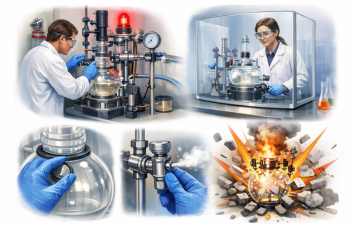
Some apparatus may be under pressure:
- Never handle pressurized glassware without training
- Always use protective shields
- Inspect seals before use
- Pressure release valves must be functional
Pressurized failures can be dangerous – always follow safety protocols.
Dealing With Hot Liquids
Hot liquids pose burn and shattering risks:
- Allow cooling before pouring
- Do not fill containers to the very top
- Use insulated gloves or tongs
Slow controlled transfers limit risk.
Minimizing Thermal Shock
To avoid thermal shock:
- Pre-heat glassware slowly if required
- Avoid adding cold liquids to warm glass
- Do not place hot glassware on cold surfaces
- Use cork rings or heat pads
Thermal shock is one of the most common causes of breakage.
Handling Glassware After Sterilization
Glassware is often sterilized using:
- Autoclaves
- Dry heat ovens
After sterilization:
- Let glassware cool naturally
- Handle with gloves
- Avoid rapid surface contact
Sterilized glassware may be extremely hot and fragile.
Training & Standard Operating Procedures (SOPs)
Every lab should establish SOPs for glassware handling, including:
- Inspection checklists
- Handling protocols
- Cleaning procedures
- Storage rules
- Emergency response
SOPs help maintain consistency and safety across teams.
Common Glassware Handling Mistakes
Avoid these frequent errors:
❌ Picking up glassware with wet or greasy hands
❌ Ignoring small chips or cracks
❌ Using damaged brushes
❌ Overloading shelves
❌ Pouring fast when measuring
Each mistake increases risk and affects results.
Glassware Handling in Different Lab Environments
Academic Labs
Focus on:
- Student training
- Routine safety reinforcement
- Consistent labeling
Clinical & Diagnostic Labs
Prioritize:
- Sterile handling
- Contamination control
- Rigid documentation
Chemical Reaction Labs
Emphasize:
- Thermal stress management
- Proper assembly
- Hazard recognition
Environmental Testing Labs
Need:
- Clean handling workflows
- Sample integrity
- Accurate measurement techniques
Different labs have different priorities, but core handling principles remain universal.
Routine Inspection & Replacement Policy
Inspect glassware regularly:
- Weekly visual checks
- Monthly functional verification
- Record inspection dates
- Retire and replace damaged items immediately
Inspection logs strengthen quality systems and support audits.
Best Practices Summary
- Always use full PPE
- Inspect glassware before use
- Handle with care (two hands)
- Avoid thermal shock
- Clean immediately after use
- Store upright and uncluttered
- Train all personnel
- Maintain SOPs and logs
Safe handling builds reliability, protects personnel, and supports accurate scientific outcomes.
Conclusion: Handling Glassware With Care Saves Lives and Improves Science
Proper handling isn’t just a procedural requirement – it’s a scientific and safety imperative. Whether you’re in a hospital lab, industrial facility, academic research center, or educational classroom, how you handle glassware influences outcomes, productivity, and workplace safety.
The policies and practices in this guide help you reduce risks, improve data quality, and extend the lifespan of your laboratory glassware.