

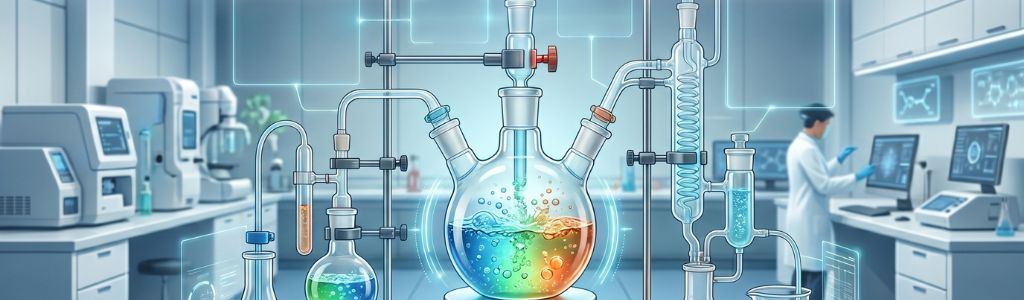
Research laboratories in 2026 are operating in more advanced and demanding environments than ever before. From pharmaceutical development and chemical analysis to biotechnology and industrial testing, laboratories now handle highly reactive substances, extreme temperatures, and precision-based experiments that require dependable equipment.
Among all laboratory tools, scientific glassware continues to play a critical role in ensuring testing accuracy, contamination control, and research safety. However, modern laboratories are increasingly prioritizing chemical-resistant glassware due to its ability to withstand harsh reagents, corrosive chemicals, and repeated testing procedures without compromising experimental results.
Today, many research facilities actively work with a trusted scientific glassware manufacturer and a reliable lab glassware wholesale supplier to source durable, high-quality glassware capable of meeting modern laboratory demands.
This article explains why chemical-resistant scientific glassware has become essential for advanced laboratory testing in 2026.
Growing Complexity of Laboratory Research
- Corrosive chemicals
- High-temperature reactions
- Acidic compounds
- Alkaline solutions
- Volatile solvents
- Pharmaceutical formulations
These processes place extreme stress on laboratory equipment.
Standard glassware often fails under such demanding conditions, leading to:
- Surface degradation
- Cracks and breakage
- Contamination risks
- Inaccurate measurements
- Reduced laboratory safety
Chemical-resistant scientific glassware helps laboratories maintain reliable performance during intensive testing.
What Makes Chemical-Resistant Glassware Different?
Chemical-resistant laboratory glassware is specifically designed to withstand:
- Acid corrosion
- Thermal shock
- Chemical reactions
- High-pressure applications
- Continuous laboratory usage
Most advanced laboratory glassware is manufactured using borosilicate glass because of its:
- Low thermal expansion
- High chemical durability
- Excellent heat resistance
- Superior clarity
This allows researchers to perform complex experiments safely and accurately.
Why Research Accuracy Depends on Glassware Quality
Laboratory testing requires precision at every stage.
Low-quality or chemically reactive glassware may:
- Alter sample composition
- Release contaminants
- React with chemicals
- Affect pH levels
- Distort measurements
Even minor contamination can compromise:
- Pharmaceutical research
- Clinical testing
- Biotechnology experiments
- Environmental analysis
High-quality chemical-resistant glassware ensures experiments remain accurate and repeatable.
Increased Use of Aggressive Chemicals in 2026
Research laboratories now work extensively with:
- Strong acids
- Industrial solvents
- Reactive compounds
- Synthetic chemicals
- Nanotechnology materials
These substances can quickly damage ordinary glassware.
Chemical-resistant glassware maintains structural integrity even during prolonged exposure to harsh laboratory environments.
Importance of Thermal Resistance
Modern research frequently involves:
- Rapid heating and cooling
- High-temperature sterilization
- Flame exposure
- Pressure testing
Standard glass may crack under sudden temperature changes.
Chemical-resistant borosilicate glassware is specifically designed to tolerate:
- Thermal shock
- Temperature fluctuations
- Repeated heating cycles
This improves both safety and long-term durability.
Preventing Laboratory Contamination
Contamination remains one of the biggest concerns in scientific testing.
Damaged or low-grade glassware may:
- Absorb chemicals
- Retain residues
- Release microscopic particles
This can negatively affect:
- Sample purity
- Experimental consistency
- Research outcomes
Chemical-resistant scientific glassware provides smooth, non-reactive surfaces that help reduce contamination risks significantly.
Why Pharmaceutical Laboratories Prefer Chemical-Resistant Glassware
Pharmaceutical research requires:
- Sterile conditions
- Precise formulations
- Reliable chemical compatibility
Glassware used in drug development must withstand:
- Repeated sterilization
- Strong chemical exposure
- High-temperature testing
Pharmaceutical laboratories rely heavily on premium glassware from a trusted scientific glassware manufacturer to maintain product quality and regulatory compliance.
Role in Biotechnology and Life Sciences
Biotechnology laboratories require glassware for:
- Cell culture preparation
- Chemical storage
- Sample mixing
- Research analysis
Chemically unstable glassware may interfere with:
- Biological samples
- DNA testing
- Protein research
Chemical-resistant glassware helps preserve sample integrity and improve testing reliability.
Industrial Laboratories Need Higher Durability
Industrial research facilities perform:
- Material testing
- Petrochemical analysis
- Quality control
- Chemical processing
These applications often involve harsh environments where weak glassware fails quickly.
Laboratories increasingly purchase equipment from a reliable lab glassware wholesale supplier to ensure long-term operational efficiency and reduced replacement costs.
Cost Efficiency Through Long-Term Durability
While premium scientific glassware may have higher initial costs, it offers significant long-term savings by:
- Reducing breakage
- Lowering replacement frequency
- Improving testing consistency
- Minimizing contamination risks
Durable glassware reduces downtime and improves laboratory productivity.
Growing Demand for Laboratory Safety
Laboratory safety regulations continue to become stricter in 2026.
Chemical-resistant glassware helps improve safety by:
- Preventing sudden breakage
- Reducing chemical leaks
- Handling high-pressure applications
- Maintaining stability during heating
Safer laboratory environments protect:
- Researchers
- Technicians
- Sensitive experiments
Sustainability Benefits of High-Quality Glassware
Modern laboratories are also focusing more on sustainability.
Reusable chemical-resistant glassware helps reduce:
- Plastic waste
- Disposable equipment usage
- Environmental impact
High-quality borosilicate glassware can withstand years of repeated laboratory use, making it a more sustainable option.
Advanced Manufacturing Standards in 2026
Today’s leading scientific glassware manufacturer companies use advanced production technologies to ensure:
- Precise dimensions
- Uniform thickness
- High chemical resistance
- Better thermal durability
Improved manufacturing standards result in more reliable laboratory equipment for advanced scientific applications.
Importance of Reliable Lab Glassware Suppliers
Research facilities depend on dependable suppliers for:
- Consistent product quality
- Bulk availability
- Technical support
- Fast delivery
- Product certifications
Choosing a trusted lab glassware wholesale supplier helps laboratories maintain operational efficiency and avoid supply chain disruptions.
Common Types of Chemical-Resistant Glassware
Laboratories commonly use:
- Beakers
- Flasks
- Test tubes
- Measuring cylinders
- Condensers
- Reaction vessels
These products must maintain accuracy under demanding laboratory conditions.
Why Borosilicate Glass Dominates Modern Laboratories
Borosilicate glass remains the preferred choice because of its:
- Excellent chemical resistance
- Superior heat tolerance
- Long operational lifespan
- Reduced contamination risk
It performs exceptionally well in:
- Pharmaceutical labs
- Chemical industries
- Research universities
- Industrial testing centers
Future of Scientific Glassware in 2026
Laboratory glassware technology continues evolving with:
- AI-assisted manufacturing
- Improved chemical coatings
- Enhanced thermal resistance
- Smarter laboratory integration
Future glassware solutions will focus even more on:
- Precision
- Durability
- Safety
- Sustainability
Final Thoughts
In 2026, research laboratories increasingly prefer chemical-resistant scientific glassware because modern testing environments require higher levels of precision, safety, durability, and contamination control than ever before.
From pharmaceutical research and biotechnology to industrial chemical analysis, premium laboratory glassware helps researchers perform advanced experiments with greater accuracy and reliability.
By partnering with a trusted scientific glassware manufacturer and an experienced lab glassware wholesale supplier, laboratories can ensure they have access to durable, high-performance glassware capable of supporting the complex scientific demands of today’s research industry.