

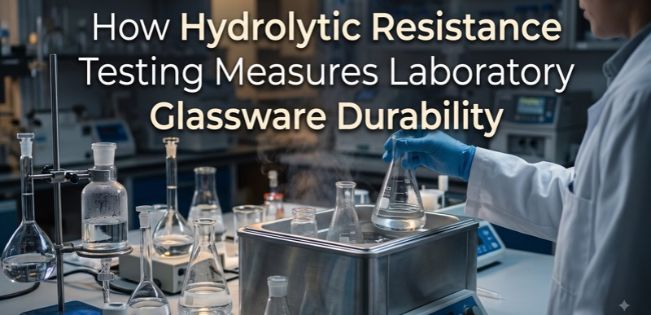
Laboratory glassware is regularly exposed to water, chemical solutions, cleaning procedures, and changing operating conditions. Over time, these interactions can affect the glass surface and influence its suitability for laboratory applications. Hydrolytic resistance testing helps evaluate how effectively glass withstands attack from water under controlled conditions. This assessment is particularly important for glassware used in pharmaceutical laboratories, chemical testing facilities, research institutions, and quality control environments.
For an OEM lab glassware manufacturer, understanding hydrolytic resistance is an important part of material evaluation and product quality assurance. Similarly, a borosilicate glassware manufacturer India must consider the chemical durability of glass products to support consistent performance across different laboratory applications.
What Is Hydrolytic Resistance in Laboratory Glassware?
Hydrolytic resistance refers to the ability of glass to resist chemical attack when it comes into contact with water. When water interacts with a glass surface, small quantities of certain components may be released into the surrounding liquid.
The extent of this interaction depends on the glass composition, manufacturing process, surface condition, and testing environment. Glass with suitable hydrolytic resistance generally shows better stability under specified test conditions.
This property is important because laboratory glassware often holds liquids that require controlled chemical conditions. Excessive interaction between glass and water can affect the composition of solutions and may be undesirable in applications where material purity is essential.
Why Hydrolytic Resistance Testing Is Important
Hydrolytic resistance testing provides measurable information about the chemical durability of glass. Instead of relying only on visual inspection, manufacturers can use standardized laboratory procedures to evaluate how glass behaves under controlled exposure to water.
The testing process helps manufacturers:
- Assess the chemical durability of glass materials.
- Compare different glass compositions and production batches.
- Identify potential variations in material quality.
- Support quality control and product specifications.
- Evaluate the suitability of glassware for intended applications.
For an OEM lab glassware manufacturer, these assessments can support product development and consistency across customized production orders.
How Hydrolytic Resistance Testing Works
Hydrolytic resistance testing generally involves exposing glass to water under defined conditions and measuring the resulting chemical interaction. The exact procedure depends on the applicable testing standard and the type of glassware being evaluated.
Common evaluation steps include:
- Sample Preparation: Representative glass samples are selected for testing. Depending on the standard, samples may consist of glass grains, containers, or prepared glass surfaces. Proper cleaning and preparation help reduce the influence of external contamination.
- Controlled Water Exposure: The prepared samples are exposed to purified water under specified conditions. Temperature, exposure duration, water quality, and other test parameters are controlled to support repeatable results.
- Chemical Extraction: During exposure, water may extract small quantities of soluble components from the glass. The amount of material released provides information about the glass’s resistance to hydrolytic attack.
- Measurement and Evaluation: The resulting extract is analyzed using the method required by the relevant standard. Depending on the procedure, measurements may involve titration or other analytical techniques.
- Classification and Documentation: Results are compared with the applicable acceptance criteria or classification requirements. Manufacturers can document the findings as part of their quality assurance records.
Factors That Influence Hydrolytic Resistance
Several factors determine how laboratory glassware performs during hydrolytic resistance testing.
- Glass Composition: The proportions of silica and other glass-forming or modifying components influence chemical durability. Manufacturers formulate borosilicate glass with boron oxide, making it widely suitable for laboratory applications due to its favorable chemical and thermal properties.
- Manufacturing Conditions: Melting temperature, forming conditions, annealing, and overall process control can influence the final glass structure. Consistent manufacturing practices help reduce unwanted variations between production batches.
- Surface Condition: Scratches, contamination, and surface damage can affect how glass interacts with liquids. Appropriate handling, finishing, and cleaning procedures help maintain the intended surface quality.
- Testing Conditions: Water purity, temperature, exposure time, and sample preparation can influence measured results. Therefore, testing must follow a defined procedure rather than relying on uncontrolled comparisons.
Why Borosilicate Glass Is Widely Used in Laboratories
Laboratory equipment commonly uses borosilicate glass because it offers low thermal expansion and generally good chemical durability. These characteristics make it suitable for many applications involving heating, cooling, liquid handling, and routine laboratory procedures.
A reliable borosilicate glassware manufacturer India should pay attention to material selection, forming accuracy, annealing, finishing, and quality inspection. Hydrolytic resistance evaluation can provide additional information about the chemical behavior of the material.
Common products manufactured from borosilicate glass include:
- Beakers and conical flasks
- Measuring cylinders
- Reagent bottles
- Funnels and glass adapters
- Distillation assemblies
- Laboratory tubes and specialized glass components
Always select the appropriate glass type based on the intended application and relevant technical requirements.
How Manufacturers Use Test Results for Quality Control
Hydrolytic resistance results can contribute to a broader quality management system. Manufacturers may use testing data to compare material batches, investigate unexpected variations, and verify that products meet defined specifications.
For an OEM lab glassware manufacturer, documented testing procedures can also support communication with distributors, laboratory equipment suppliers, and institutional buyers. However, hydrolytic resistance is only one measure of glass quality. Consider it alongside dimensional accuracy, thermal performance, visual inspection, mechanical integrity, and application-specific requirements.
Final Thoughts
Hydrolytic resistance testing plays an important role in evaluating the chemical durability of laboratory glassware. By measuring how glass interacts with water under controlled conditions, manufacturers can gain useful information about material stability and production consistency.
For every OEM lab glassware manufacturer and borosilicate glassware manufacturer India, combining appropriate material selection with standardized testing and process control helps support dependable laboratory products. A comprehensive quality approach evaluates glassware not only for its appearance but also for the performance requirements of its intended application.
Frequently Asked Questions
What does hydrolytic resistance mean in glassware?
It describes the ability of glass to resist chemical attack when exposed to water under specified conditions.
Why is hydrolytic resistance testing important?
It helps evaluate chemical durability, compare material batches, and support quality control in laboratory glassware manufacturing.
Is borosilicate glass suitable for laboratory applications?
Yes. Borosilicate glass offers favorable chemical durability and low thermal expansion, making it widely used, although its suitability depends on the specific application.
Does hydrolytic resistance testing measure thermal shock resistance?
No. Hydrolytic resistance evaluates chemical interaction with water. Thermal shock resistance requires separate testing of how glass responds to temperature changes.
Can hydrolytic resistance testing improve manufacturing consistency?
Yes. When performed using controlled procedures, it provides data that manufacturers can use to monitor material quality and identify production variations.