

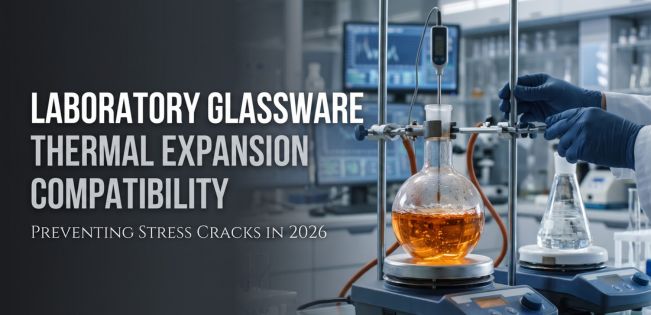
Laboratory glassware used in multi-stage heating applications must withstand repeated temperature changes without losing structural integrity. From chemical synthesis and distillation to sample preparation and thermal testing, sudden or uneven heating can create internal stresses that lead to cracks or breakage. Choosing suitable glass materials and understanding thermal expansion behavior are essential for improving laboratory safety. A reliable borosilicate glassware manufacturer India helps laboratories select products designed for appropriate thermal conditions, while an experienced OEM lab glassware manufacturer can support application-specific requirements for specialized scientific equipment.
Understanding Thermal Expansion in Laboratory Glassware
Thermal expansion describes how a material changes dimensions when its temperature increases. When laboratory glassware is heated, its material expands; when it cools, it contracts. Problems can occur when different sections of a glass vessel experience temperature changes at different rates.
For example, during multi-stage heating, the bottom of a flask may become hot while its neck or upper walls remain relatively cool. This uneven expansion creates thermal stress within the glass. If the stress exceeds the material’s ability to withstand it, cracks may develop.
Glass composition plays an important role in this process. Borosilicate glass generally has a lower coefficient of thermal expansion than ordinary soda-lime glass, making it suitable for many laboratory applications involving temperature variations. However, its resistance to thermal shock still depends on heating rates, temperature differences, glass thickness, vessel geometry, and existing surface damage.
Why Multi-Stage Heating Creates Stress Cracks
Multi-stage heating involves exposing laboratory glassware to different temperature levels during a single procedure or across repeated cycles. These conditions can be found in distillation, reflux, evaporation, chemical processing, and thermal analysis.
Several factors can increase the risk of stress cracking:
- Uneven heat distribution: Direct flame contact or poorly positioned heating elements can create localized hot spots.
- Rapid temperature changes: Moving hot glassware onto a cold surface or introducing a cold liquid into a heated vessel can generate significant thermal stress.
- Uneven wall thickness: Variations in glass thickness can cause different sections to heat and cool at different rates.
- Mechanical damage: Small scratches, chips, or damaged ground-glass joints can act as starting points for cracks.
- Repeated thermal cycling: Frequent heating and cooling may expose existing weaknesses and increase the likelihood of failure.
Selecting suitable glassware and controlling the heating process can reduce these risks and support more consistent experimental results.
How Borosilicate Glass Improves Thermal Compatibility
Borosilicate glass is widely used in scientific laboratories because of its relatively low thermal expansion and good chemical resistance across many applications. Its lower expansion rate helps reduce the dimensional changes that occur during temperature fluctuations compared with many conventional glass materials.
When evaluating laboratory equipment, buyers should consider the intended operating temperature, heating method, expected temperature gradients, and frequency of thermal cycling. A qualified borosilicate glassware manufacturer India can help customers identify appropriate glassware options for their laboratory procedures.
Nevertheless, borosilicate glass is not immune to thermal shock. Its performance depends on the particular glass grade, manufacturing quality, product design, and operating conditions. Users should always follow the manufacturer’s temperature limits and handling instructions rather than assuming that every borosilicate product is suitable for direct flame heating or sudden temperature changes.
The Role of Manufacturing Precision in Stress Prevention
Consistent manufacturing quality is essential when glassware must tolerate demanding thermal conditions. Variations in wall thickness, forming quality, joint alignment, and surface finish can influence how stress develops during heating and cooling.
An experienced OEM lab glassware manufacturer can work with laboratories, distributors, and scientific equipment brands to define product dimensions and manufacturing specifications for particular applications. Depending on the product and requirements, quality checks may include dimensional inspection, visual examination, joint compatibility checks, and suitable testing procedures.
Uniform wall thickness can help promote more consistent heat transfer, while properly finished surfaces and joints can reduce avoidable mechanical weaknesses. Traceable production specifications and repeatable quality-control procedures also help buyers maintain consistency when ordering laboratory glassware in larger quantities.
For specialized equipment, manufacturers and buyers should agree on the intended operating conditions before production begins. This allows product geometry, material selection, and inspection requirements to be aligned with the intended use.
Best Practices for Safe Multi-Stage Heating
Even high-quality glassware can crack if it is used incorrectly. Laboratories should combine suitable material selection with controlled heating procedures.
Recommended practices include:
- Increase temperature gradually: Avoid sudden exposure to extreme heat unless the equipment is specifically designed and approved for the procedure.
- Promote even heating: Use appropriate heating mantles, controlled hot plates, or other compatible heating equipment when suitable.
- Avoid sudden cooling: Allow glassware to cool in a controlled manner and avoid placing hot vessels on cold or wet surfaces.
- Inspect before use: Check for scratches, chips, cracks, and damage around joints or vessel edges.
- Follow product specifications: Observe manufacturer guidance for temperature limits, heating methods, and cleaning procedures.
- Use suitable supports: Prevent uneven clamping, excessive mechanical loads, and contact with hard surfaces that may damage the glass.
These measures help minimize preventable breakage, protect laboratory personnel, and reduce interruptions caused by damaged equipment.
Choosing the Right Laboratory Glassware Manufacturer
When sourcing glassware for multi-stage heating applications, buyers should evaluate material specifications, dimensional consistency, product suitability, quality-control practices, and the manufacturer’s ability to meet application requirements.
A dependable borosilicate glassware manufacturer India can provide product information that supports informed purchasing decisions. Similarly, an established OEM lab glassware manufacturer may offer customized dimensions, product configurations, and manufacturing arrangements for laboratories and scientific equipment suppliers.
Before placing an order, buyers should communicate the intended application, temperature range, heating method, connection requirements, and any relevant quality standards. Clear specifications help ensure that the selected products are appropriate for their intended operating conditions.
Final Thoughts
Thermal expansion compatibility is an important consideration when laboratory glassware is exposed to repeated or multi-stage heating. Selecting suitable borosilicate glass, maintaining consistent manufacturing quality, and following controlled heating and cooling procedures can reduce thermal stress and help prevent avoidable cracking.
Working with a knowledgeable borosilicate glassware manufacturer India or an experienced OEM lab glassware manufacturer allows laboratories and distributors to evaluate product specifications more effectively and source glassware suited to their scientific applications. The best results come from combining appropriate material selection with careful handling, inspection, and adherence to manufacturer guidance.
Frequently Asked Questions
Why can laboratory glassware crack during multi-stage heating?
Uneven heating, rapid temperature changes, mechanical damage, and variations in wall thickness can create thermal stress that exceeds the glass’s strength.
Why is borosilicate glass commonly used in laboratories?
Borosilicate glass has a relatively low coefficient of thermal expansion and good chemical resistance, making it suitable for many laboratory applications involving temperature changes.
Can borosilicate glass withstand every heating condition?
No. Its thermal-shock resistance depends on the glass grade, product design, temperature difference, heating rate, and condition of the glassware. Manufacturer specifications must be followed.
What should buyers check when choosing an OEM lab glassware manufacturer?
Buyers should review material specifications, dimensional consistency, quality-control procedures, customization capabilities, and suitability for the intended laboratory application.