

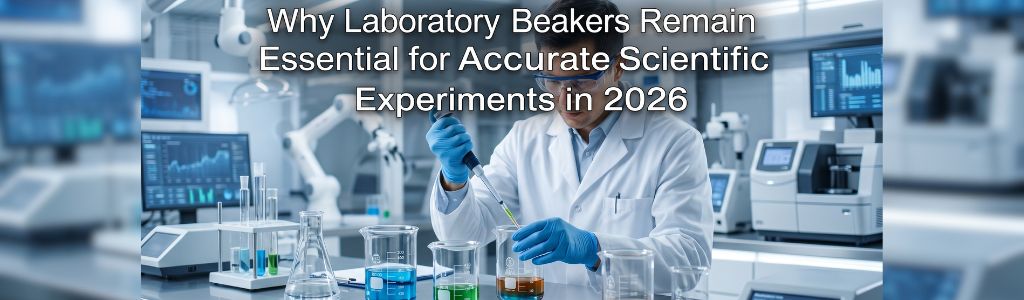
Laboratory technology continues evolving rapidly in 2026 with the rise of AI-powered research systems, automation, and advanced analytical equipment. Despite these innovations, one traditional piece of scientific equipment remains essential in nearly every laboratory worldwide — the laboratory beaker.
From chemical analysis and pharmaceutical testing to biotechnology and educational experiments, laboratory beakers continue playing a critical role in modern scientific research. Their simple yet highly functional design makes them one of the most versatile and widely used tools in laboratories.
Today, laboratories increasingly rely on trusted suppliers and every professional scientific glassware manufacturer to provide durable, high-quality beakers that support precise and safe scientific work. At the same time, choosing the right laboratory beaker supplier has become increasingly important for maintaining experiment accuracy and laboratory efficiency.
This guide explains why laboratory beakers remain indispensable for scientific experiments in 2026 and how quality glassware directly impacts research performance and safety.
What Is a Laboratory Beaker?
A laboratory beaker is a cylindrical glass container commonly used for:
- Mixing chemicals
- Heating substances
- Measuring liquids
- Conducting reactions
- Preparing samples
Beakers typically include:
- Flat bottoms
- Graduated measurement markings
- Wide openings
- Pouring spouts
Their versatile design makes them suitable for countless scientific applications.
Why Beakers Remain Important in Modern Laboratories
Even with advanced digital instruments available today, laboratory beakers remain essential because they offer:
- Simplicity
- Reliability
- Flexibility
- Easy handling
- Cost-effectiveness
Modern scientific processes still require manual preparation, mixing, and observation, making beakers one of the most frequently used laboratory tools.
Importance of High-Quality Glassware
Poor-quality beakers can negatively affect:
- Measurement accuracy
- Chemical reactions
- Experiment consistency
- Laboratory safety
Low-grade glassware may:
- Crack under heat
- React with chemicals
- Break easily
- Develop surface contamination
This is why laboratories prefer purchasing from a professional scientific glassware manufacturer with strict quality standards.
Borosilicate Glass Is the Industry Standard
Most modern laboratory beakers are made from borosilicate glass because of its superior performance.
Benefits of Borosilicate Glass
- High thermal resistance
- Excellent chemical durability
- Low thermal expansion
- Better shock resistance
- Longer lifespan
Borosilicate beakers are ideal for:
- Heating applications
- Chemical analysis
- Research experiments
- Pharmaceutical testing
Why Accurate Measurements Matter
Laboratory experiments depend heavily on precision.
Even small measurement errors can affect:
- Chemical balance
- Reaction outcomes
- Research validity
- Product testing accuracy
Beakers with clear and accurate graduations help researchers:
- Prepare solutions properly
- Maintain consistency
- Reduce experimental errors
A trusted laboratory beaker supplier ensures calibration quality and manufacturing precision.
Beakers Support Multiple Scientific Applications
Laboratory beakers are used across many industries including:
- Pharmaceuticals
- Biotechnology
- Chemical engineering
- Food testing
- Educational research
- Environmental science
Their versatility makes them essential for both simple and advanced scientific procedures.
Heat Resistance Improves Laboratory Safety
Many experiments involve:
- Direct heating
- Boiling liquids
- High-temperature reactions
- Sterilization procedures
Inferior glassware may shatter under rapid temperature changes.
High-quality borosilicate beakers resist:
- Thermal shock
- Heat stress
- Cracking
This improves both:
- Experiment reliability
- Research safety
Chemical Resistance Protects Experiment Integrity
Laboratory beakers frequently contact:
- Acids
- Solvents
- Alkalis
- Reactive compounds
Poor-quality glass may react chemically or contaminate samples.
A reliable scientific glassware manufacturer produces chemically resistant beakers that preserve:
- Sample purity
- Experiment consistency
- Accurate research outcomes
Why Laboratories Need Durable Glassware
Busy laboratories use beakers continuously throughout the day.
Durable beakers reduce:
- Breakage risks
- Replacement costs
- Experiment interruptions
- Safety hazards
High-quality manufacturing improves long-term performance and lowers operational expenses.
Importance of Transparent Glass
Clear visibility is essential during experiments.
Researchers must observe:
- Color changes
- Reaction behavior
- Precipitation formation
- Liquid levels
Premium-quality glass offers better transparency, improving observation accuracy during scientific procedures.
Why Educational Laboratories Depend on Beakers
Educational institutions continue using beakers extensively because they help students:
- Learn scientific measurement techniques
- Understand chemical reactions
- Practice safe laboratory handling
- Conduct practical experiments
Beakers remain one of the first scientific tools students encounter in laboratory training.
Growing Demand for Customized Laboratory Glassware
Modern laboratories increasingly require specialized beaker designs such as:
- Heat-resistant beakers
- High-volume beakers
- Graduated precision beakers
- Industrial process beakers
An experienced laboratory beaker supplier can provide customized solutions for different research applications.
Why Quality Control Matters in Manufacturing
Reliable laboratory glassware manufacturers perform:
- Thermal testing
- Chemical resistance testing
- Structural durability checks
- Calibration verification
Strict quality control ensures beakers perform safely under demanding laboratory conditions.
Sustainability Benefits of Laboratory Glassware
Reusable borosilicate glassware supports sustainability by reducing:
- Plastic waste
- Disposable laboratory materials
- Environmental impact
Modern laboratories increasingly prefer durable reusable glass products over single-use plastic alternatives.
Common Mistakes That Damage Beakers
Improper handling can shorten beaker lifespan.
Common mistakes include:
- Sudden temperature changes
- Overheating empty beakers
- Using abrasive cleaning tools
- Stacking improperly
- Exposing glass to impact damage
Proper handling improves durability and laboratory safety.
Why Laboratories Still Prefer Glass Over Plastic
While plastic containers are lightweight, they often:
- Warp under heat
- Absorb chemicals
- Scratch easily
- Reduce visibility
Glass beakers provide:
- Better chemical resistance
- Higher heat tolerance
- Improved transparency
- Greater long-term reliability
This is why glass remains the preferred material for many scientific applications.
Future of Laboratory Beakers in 2026
Laboratory glassware continues evolving with:
- Precision manufacturing
- Improved thermal engineering
- Smart laboratory integration
- AI-assisted monitoring systems
However, the fundamental role of laboratory beakers remains unchanged because scientific research still depends heavily on safe and accurate liquid handling.
Why Choosing the Right Supplier Matters
Working with a trusted scientific glassware manufacturer helps laboratories ensure:
- Product consistency
- Experiment reliability
- Safer research environments
- Long-lasting equipment
Similarly, a dependable laboratory beaker supplier provides high-quality products that support both scientific accuracy and operational efficiency.
Final Thoughts
Laboratory beakers continue playing a critical role in scientific research in 2026 because they provide reliable, accurate, and versatile solutions for handling liquids, conducting reactions, and preparing samples.
From pharmaceutical testing and biotechnology research to educational experiments and industrial analysis, high-quality beakers remain essential for safe and precise laboratory work.
By partnering with a trusted scientific glassware manufacturer and experienced laboratory beaker supplier, laboratories can ensure durable, heat-resistant, and chemically stable glassware that improves both research accuracy and laboratory safety.
As scientific research becomes increasingly advanced, laboratory beakers remain one of the most important foundations of modern experimental science.